The creative formats that survive scale on Meta and TikTok: hook patterns, lengths, aspect ratios and how many variants a brand actually needs.
Contents10 sections
- 01Creative is the targeting now
- 02Four formats that still work
- 03The hook taxonomy
- 04Specs, without the guesswork
- 05How many variants you actually need
- 06One CGI master, a year of ads
- 07Reading the numbers
- 08A production model that keeps up
- 09What to do when everything fatigues at once
- 10Where the creative and the store meet
With broad targeting and automated placements doing most of the audience work, the creative is what decides who sees your ad. That has one consequence worth stating plainly: creative volume is a media variable now, not a design preference.
Creative is the targeting now
You no longer choose an audience with any precision. You choose an asset, and the platform finds the people who respond to it. A UGC testimonial and a cinematic CGI film for the same product will be shown to substantially different people, and the difference between their results is often an audience difference disguised as a creative one.
For a brand buying paid social at scale, this changes planning. Instead of asking which single ad is best, you ask how many meaningful concepts you can put into the account each month, and how fast you can iterate on the ones that work. Underproducing creative is now a media constraint that shows up as rising CPA.
Four formats that still work
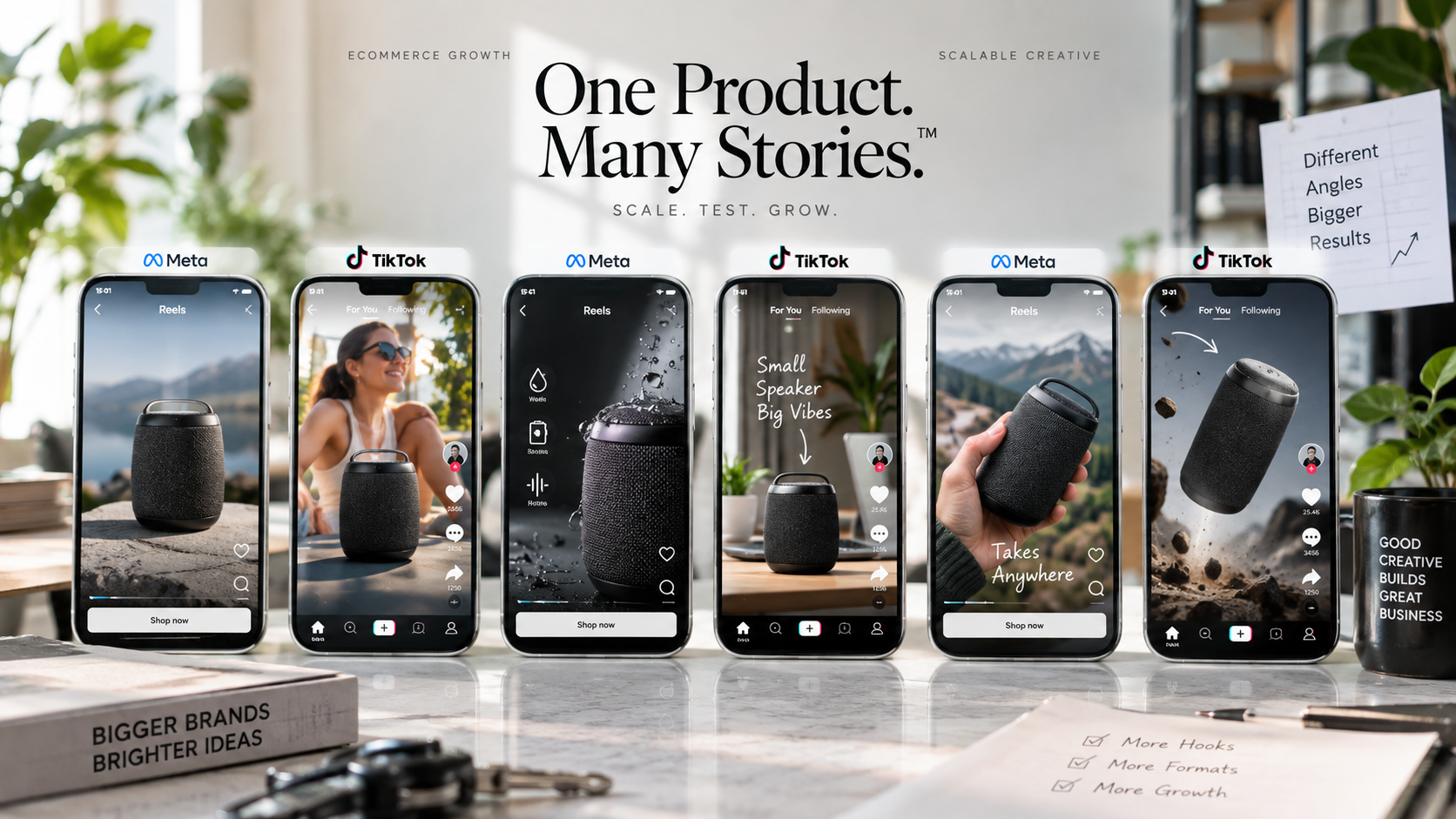
Problem-solution. Open on the frustration, resolve with the product. Good at cold traffic and at explaining a product nobody was looking for. Breaks when the problem is generic - a problem that fits any product persuades nobody. Cheap to produce, especially from existing footage.
Product demo loop. A short, satisfying repetition of the product doing its thing. Good at design-led and mechanically interesting products, and it survives muting completely. Breaks when the product is not visually interesting in motion. Inexpensive if a CGI master exists, since it is a re-cut rather than a new production.
UGC testimonial. Creator or customer speaking to camera, product in hand. Good at cold prospecting and at trust, because it reads as a recommendation. Breaks when it is over-scripted - visibly directed UGC performs worse than either honest UGC or honest polish. Cost is per creator and scales linearly, which is its main limitation.
Founder or brand film. Why the company exists. Good at retargeting, at higher price points, and at building the brand layer that makes everything else cheaper over time. Breaks as a cold prospecting workhorse - it needs an audience that already paused. Produced once, used for a long time.
The hook taxonomy
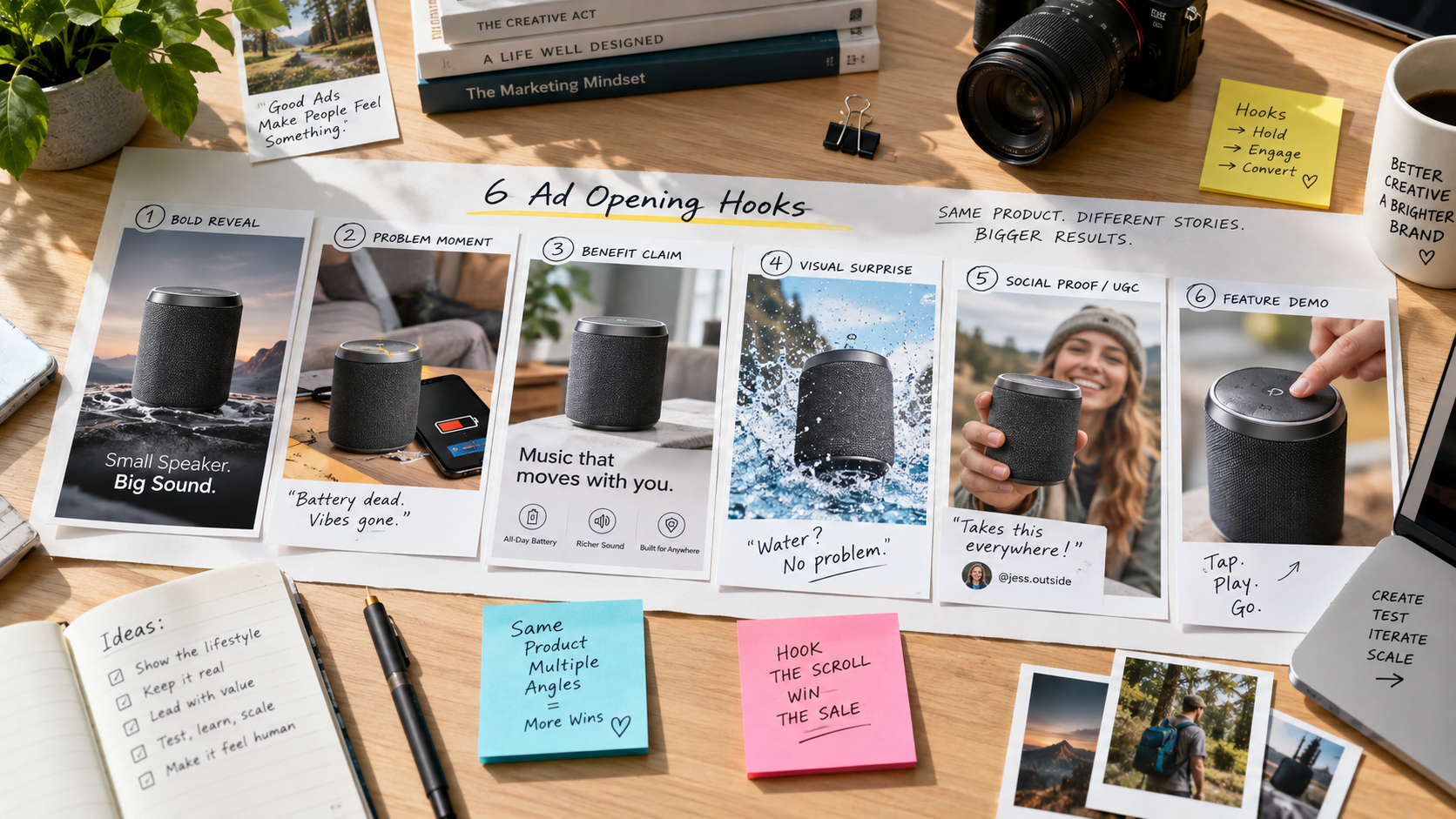
The hook is the first one and a half seconds, and for most viewers it is the entire ad. Six patterns that reliably earn the next second:
- Visual anomaly. Something on screen that should not be possible. "Wait, how is it doing that."
- Direct question. Addressed to a specific person. "Still charging three devices with one cable?"
- Unboxing motion. Hands, a lid, a reveal. Motion toward the product rather than of it.
- Before/after. The two states in one frame, or in one hard cut.
- Price or offer. Blunt, effective on retargeting, weak on cold traffic.
- Social proof. A number or a quote as the opening image. "Four thousand backers funded this."
Specs, without the guesswork
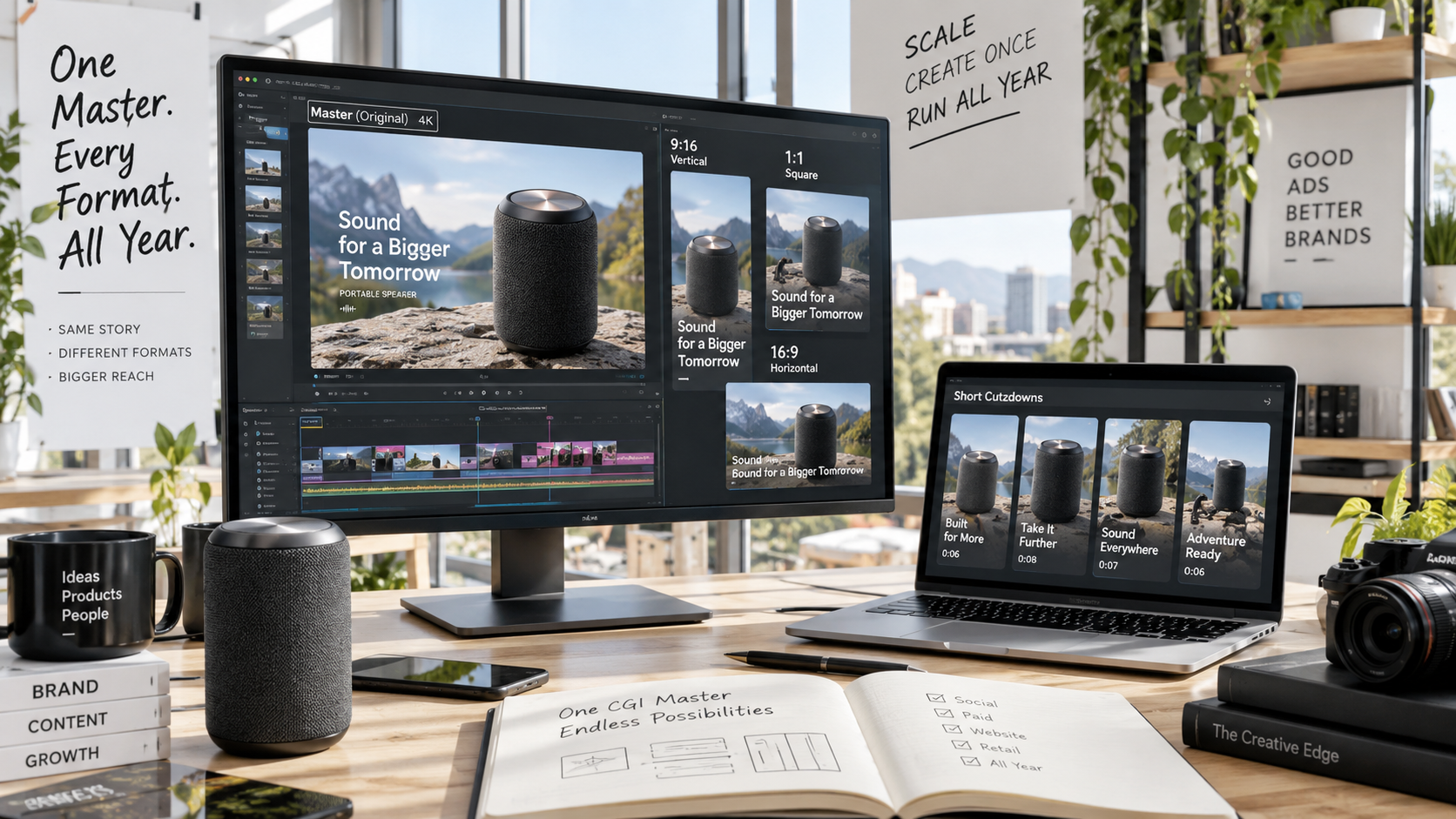
- Vertical 9:16 by default. Square as a secondary for feed placements. Horizontal only where you know the placement.
- Respect the safe zones. Platform UI eats the top and bottom of the frame. Keep captions and product out of those bands.
- Captions always on, burned in. Most views are muted, and platform auto-captions are unreliable and unstyled.
- Length by job. Six to ten seconds for retargeting and offers, fifteen to thirty for prospecting, longer only when the opening has proven it can hold.
- The first frame must work as a static. It is your thumbnail in every placement that does not autoplay.
How many variants you actually need
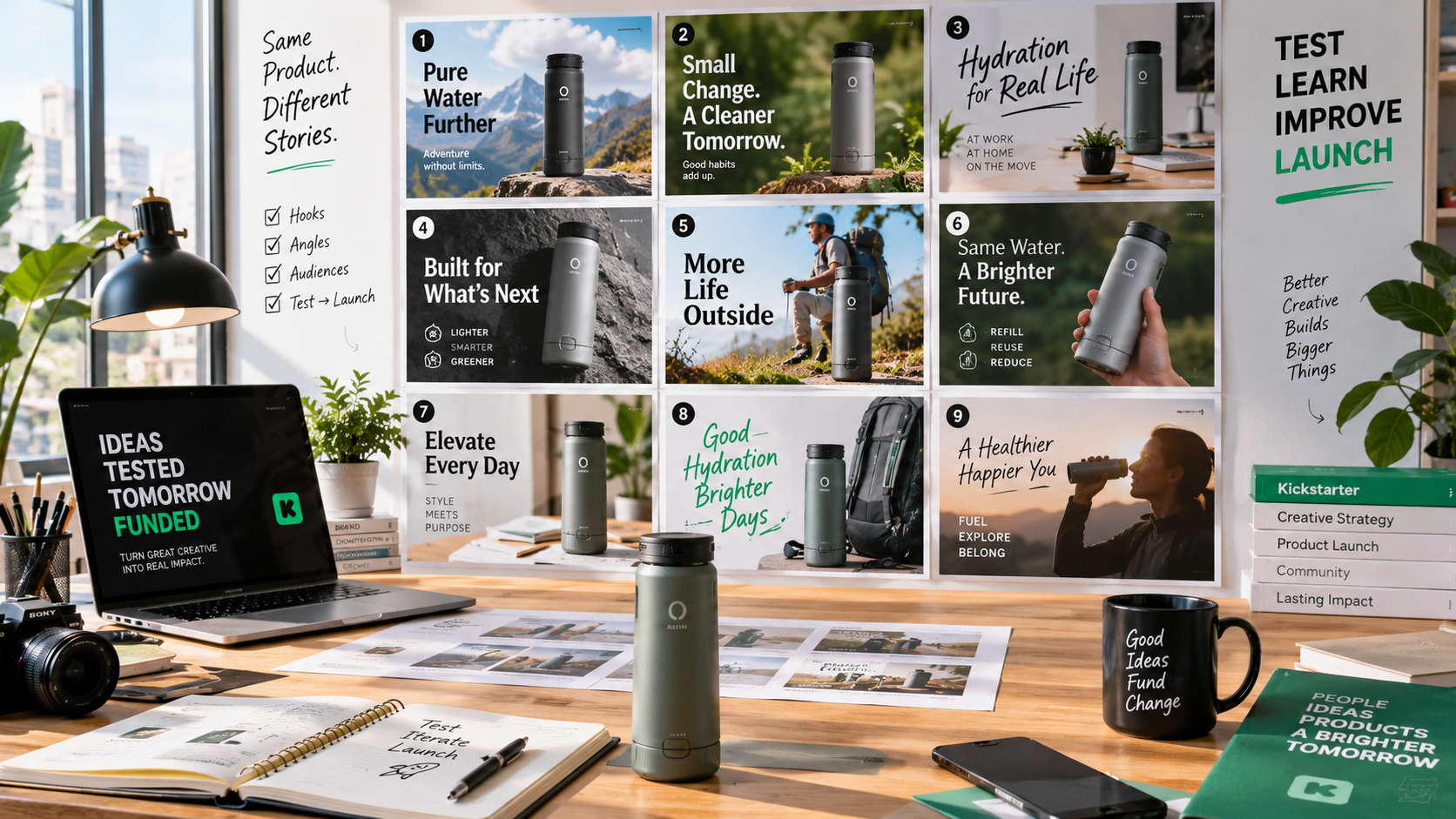
The useful mental model is a small number of net-new concepts per month, plus a much larger number of iterations on whatever is currently working. A concept is a new argument. An iteration is a new hook, a new length, a new caption, a new context - cut from an existing master.
This is why one strong hero asset plus many cutdowns beats many thin hero assets. Nine variants from one CGI build or one shoot day cost edit time. Nine separate productions cost nine productions, and eight of them will lose.
Treat any specific numbers as calibration ranges for your own account, not universal rules: the right volume is whatever keeps your best-performing creative from being shown to the same people too many times.
[Data placeholder - to supply: our real production throughput figures - variants per master, typical turnaround per iteration batch - to replace the qualitative guidance above.]
One CGI master, a year of ads
Here is the argument for building the 3D asset once, properly.
A finished CGI model with correct materials is a permanent production capability. New angle: a camera move, not a shoot. New colorway: a material swap. New season: a background change. New format: a re-render at a different aspect ratio. New hook: two seconds of new motion at the head of an existing cut.
Every one of those is a fresh ad variant produced in hours, from an asset you already paid for. A shoot day gives you the footage you captured on that day, forever. For any brand that needs sustained creative volume - which now means any brand spending seriously on paid social - that difference compounds into the largest line-item saving in the creative budget.
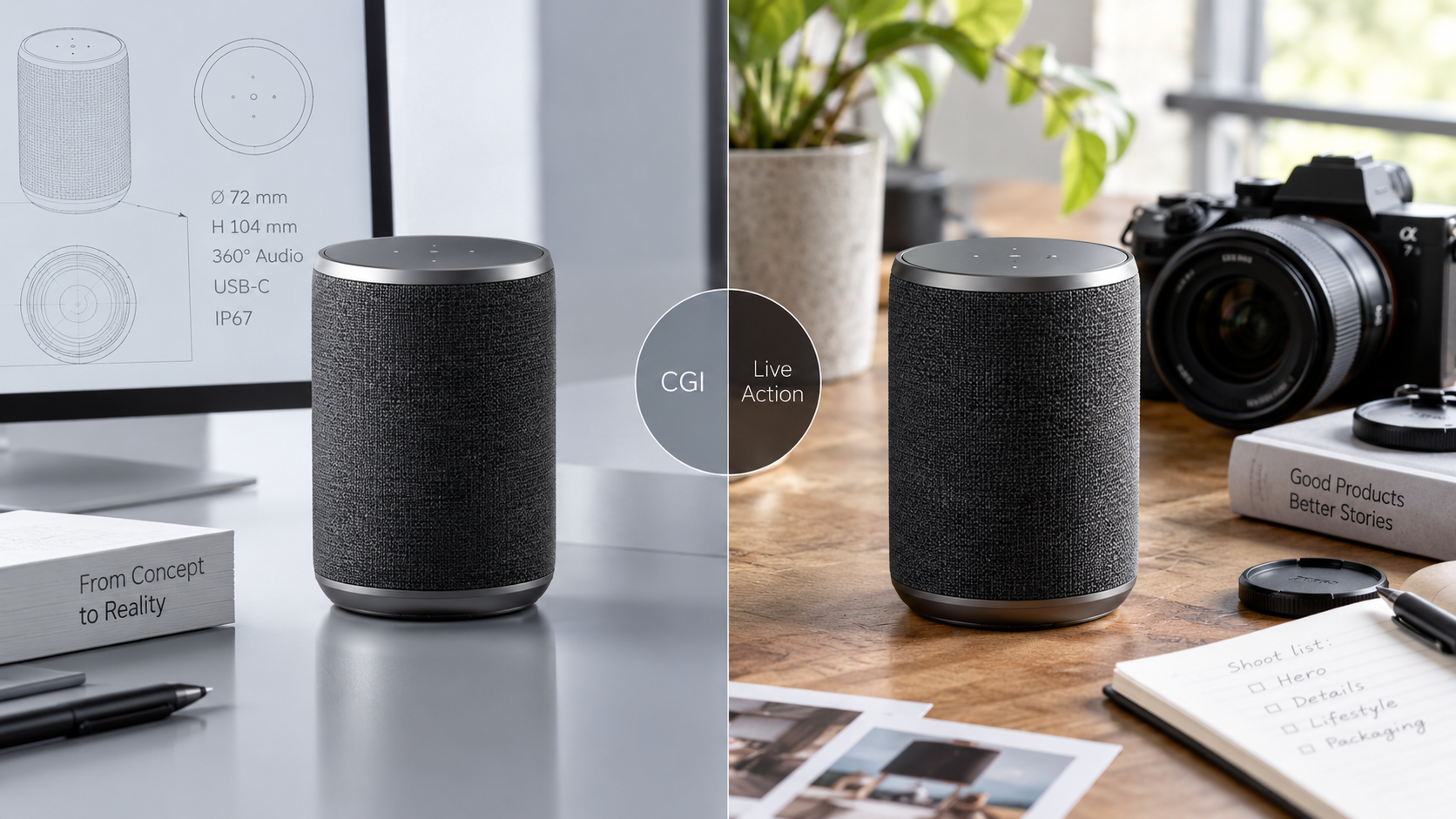
The trade-off, stated honestly: CGI-only accounts can start to feel like advertising. The strongest accounts we see pair a CGI master for product truth with creator footage for social proof, and let the platform decide which one each person needs. The full comparison is in CGI vs. live action.
Reading the numbers
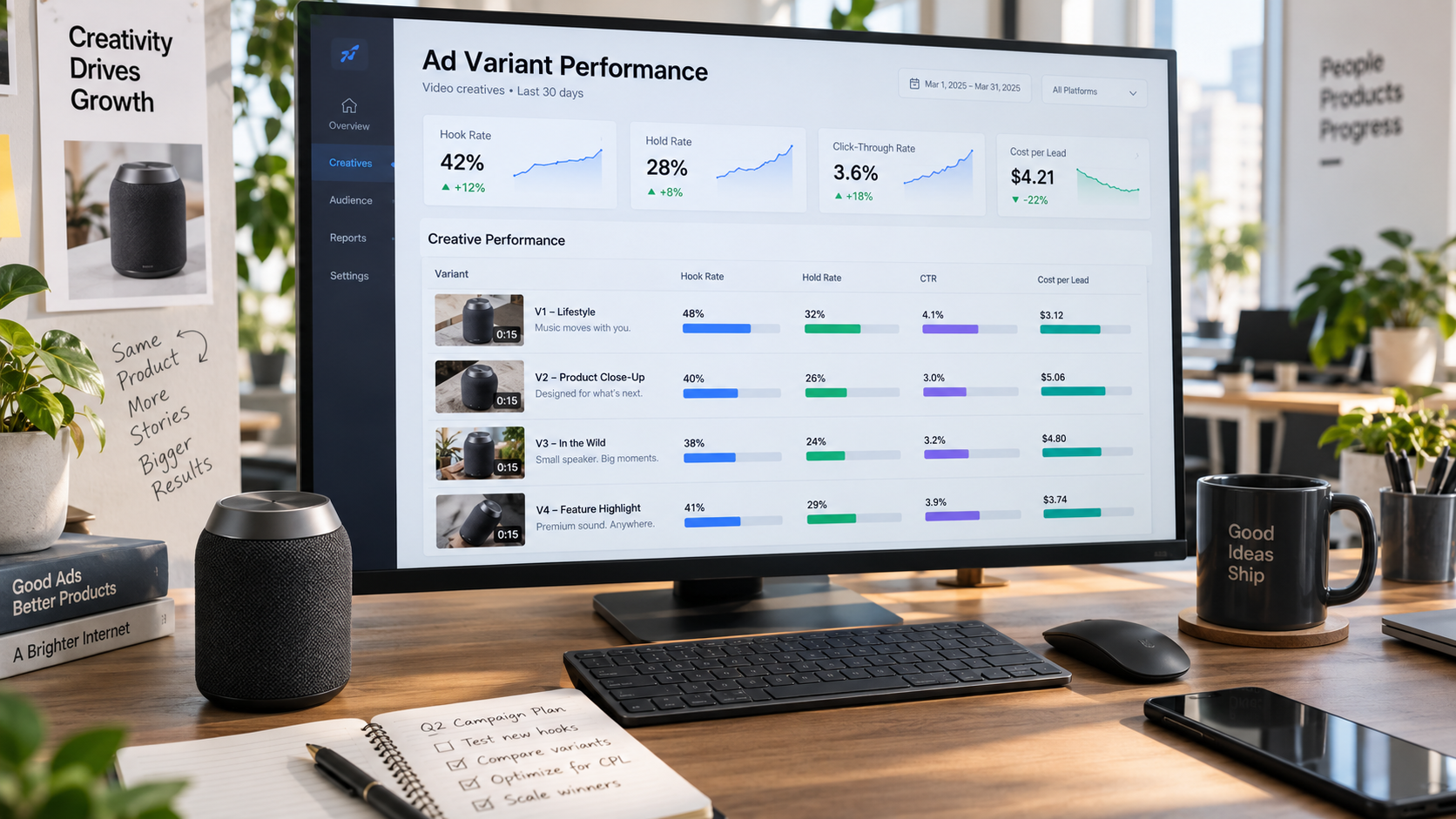
| Metric | What it measures | What to change when it's weak |
|---|---|---|
| Hook rate | 3s views / impressions | The first frame and the first motion |
| Hold rate | 15s views / 3s views | The middle - pacing, captions, order of claims |
| CTR | Clicks / impressions | The promise, and whether the ad states an action |
| CPA | Spend / purchases | The landing page and the offer, not the ad |
Diagnose in that order. Fixing the landing page will not save an ad nobody watches past second three, and re-cutting the hook will not fix a product page that hides the shipping cost.
Then watch frequency. When a winning creative's performance decays while your account structure is unchanged, that is fatigue, and the answer is a new iteration rather than a new bid strategy. Building a refresh cadence you can actually sustain - a steady batch of iterations arriving before the current winner tires - is the difference between an account that scales and one that plateaus.
For brands arriving here straight from a funded campaign, the assets you already own are most of the input: see the post-campaign playbook.
A production model that keeps up
Sustained creative volume is an operations problem more than a creative one, and the accounts that manage it look similar.
One master per quarter, iterations weekly. A quarterly production - a shoot, a CGI build, or a creator batch - supplies the raw material. Weekly editing sessions turn it into variants. Nothing waits for a new production.
A named hook bank. Keep a running list of hook ideas with the pattern each belongs to, so an iteration session starts with options instead of a blank page.
A briefing format that fits on one page. Product, audience, promise, hook pattern, length, placement, reference. Long briefs slow batches down without improving them.
A kill rule agreed in advance. Decide the spend threshold and the metric at which a variant is cut, before you have feelings about it. Creative decisions made emotionally at 2pm on a Friday are the most expensive kind.
What to do when everything fatigues at once
Occasionally the whole account decays together, and it looks like a platform problem. Usually it is a saturation problem: every variant in rotation shares the same hook pattern and the same visual register, so the audience has effectively seen one ad many times.
The fix is not more iterations of the same thing. It is one genuinely different concept - a different format from the four above, a different hook pattern, a different register. This is the argument for keeping a small, deliberately diverse set of concepts live even when one is winning: it costs a little efficiency now and buys you an alternative for the week the winner dies.
Where the creative and the store meet
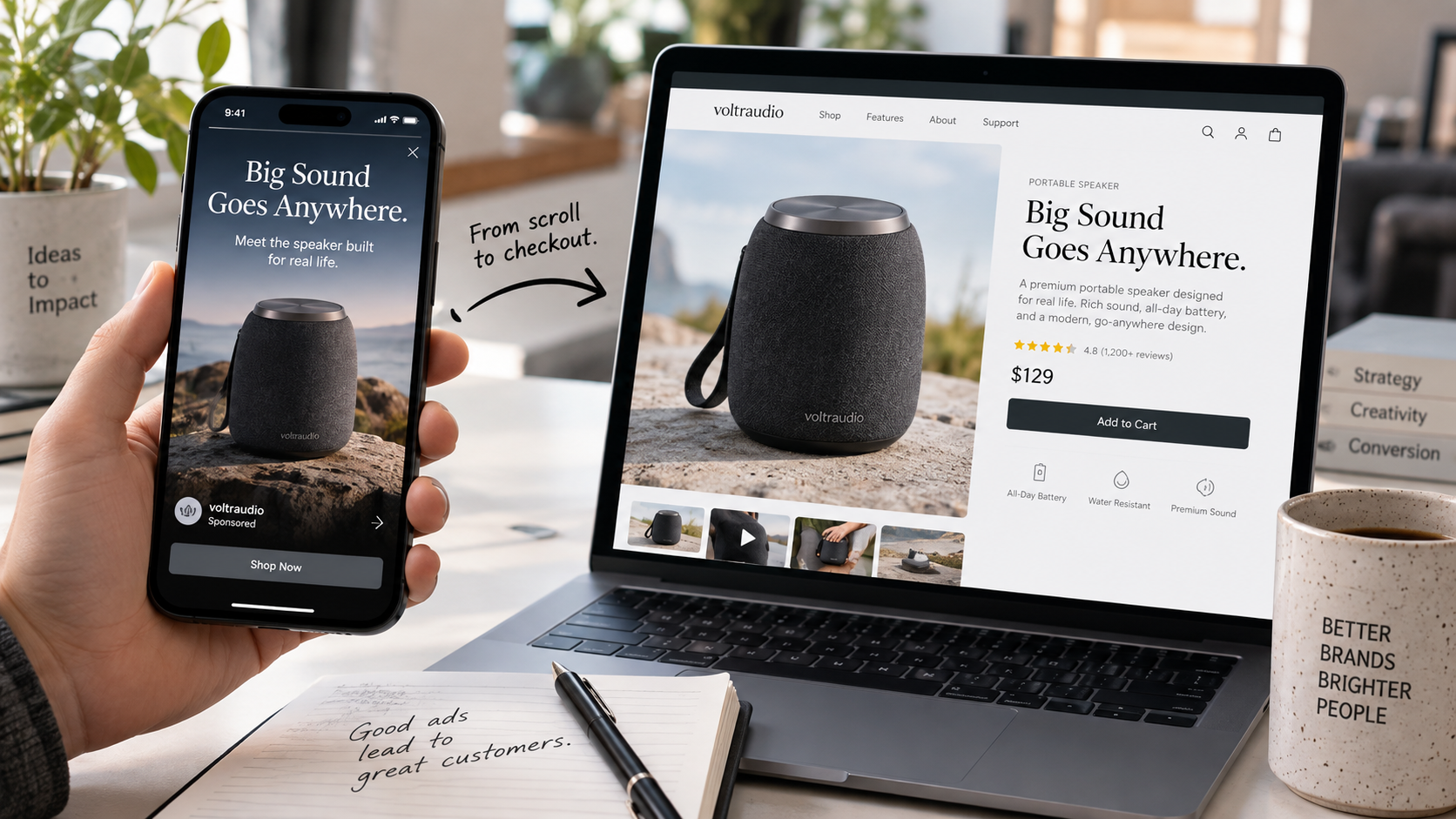
Two numbers decide whether creative work pays back: the cost of the click, and what happens after it. Ads and product pages fail in similar ways - a hook that overpromises, a page that buries the shipping cost, a claim on screen that the page never repeats.
Match them deliberately. The promise in the ad's first two seconds should appear, in the same words, in the first line a visitor reads after clicking. Where that continuity exists, ads that look mediocre on hook rate can still be the most profitable in the account.
Frequently asked questions
What video length works best for Meta ads?
Most product video ads on Meta perform best between fifteen and thirty seconds, with the decisive work done in the first two. Shorter six-to-ten-second cuts are effective for retargeting and offer messages, where the viewer already knows the product. Longer edits can work for considered purchases, but only when the opening earns the attention - length never rescues a weak hook, it just extends it.
How many ad creatives do I need per month?
Creative volume should scale with spend, not with taste. The practical model is a small number of genuinely new concepts each month plus a larger number of iterations on whatever is currently working. Iterations are new hooks, new lengths, new captions and new contexts cut from existing masters, which is why one strong master asset beats several thin ones. Calibrate the exact numbers against your own account's fatigue curve.
Does UGC still outperform polished video?
UGC and polished video do different jobs, so the comparison depends on the audience. Creator-style footage generally wins on cold prospecting because it reads as a recommendation rather than an advertisement. Polished and CGI work tends to win where the product's design, engineering or materials are the reason to buy, and on retargeting where credibility matters more than relatability. Most accounts at scale run both.
Can 3D product renders be used for social ads?
3D product renders work well in social ads and have one structural advantage: a single model produces unlimited angles, colorways, contexts and aspect ratios without another shoot. That makes CGI the cheapest way to sustain creative volume over a year. The caveat is that renders alone can feel like advertising, so the strongest accounts pair CGI hero shots with creator footage in the same account.