How to test hooks, angles and visuals with a small ad budget before your campaign opens - and how to read the results without fooling yourself.
Contents11 sections
- 01Guessing is the expensive option
- 02What you are actually testing
- 03The 3x3 matrix
- 04Budget and duration
- 05The metrics, and what each one actually tells you
- 06Reading results honestly
- 07The winner becomes the video
- 08How to build nine variants without nine productions
- 09The four-week testing calendar
- 10What a test cannot tell you
- 11Why nine variants cost less than you think
After launch, a weak hook costs you the campaign. Before launch, it costs a few hundred dollars and a week of patience.
Guessing is the expensive option
Every campaign makes a bet about which promise makes strangers care. Founders usually make that bet in a meeting, based on which line the room liked. Then they build a two-minute film and a whole page on top of it, and find out whether the bet was right on the one day when being wrong is most expensive.
Pre-launch traffic removes that risk almost entirely. You are buying information at the cheapest point in the whole project: before the film is locked, before the page copy is written, before the ad budget is committed.
What you are actually testing
Four variables, in descending order of impact. Test one layer at a time or you will not know what caused the result.
- The hook frame. The first one to two seconds. Nothing else you change will move the numbers as much.
- The value proposition wording. Which promise, in which words. Same product, different reason to care.
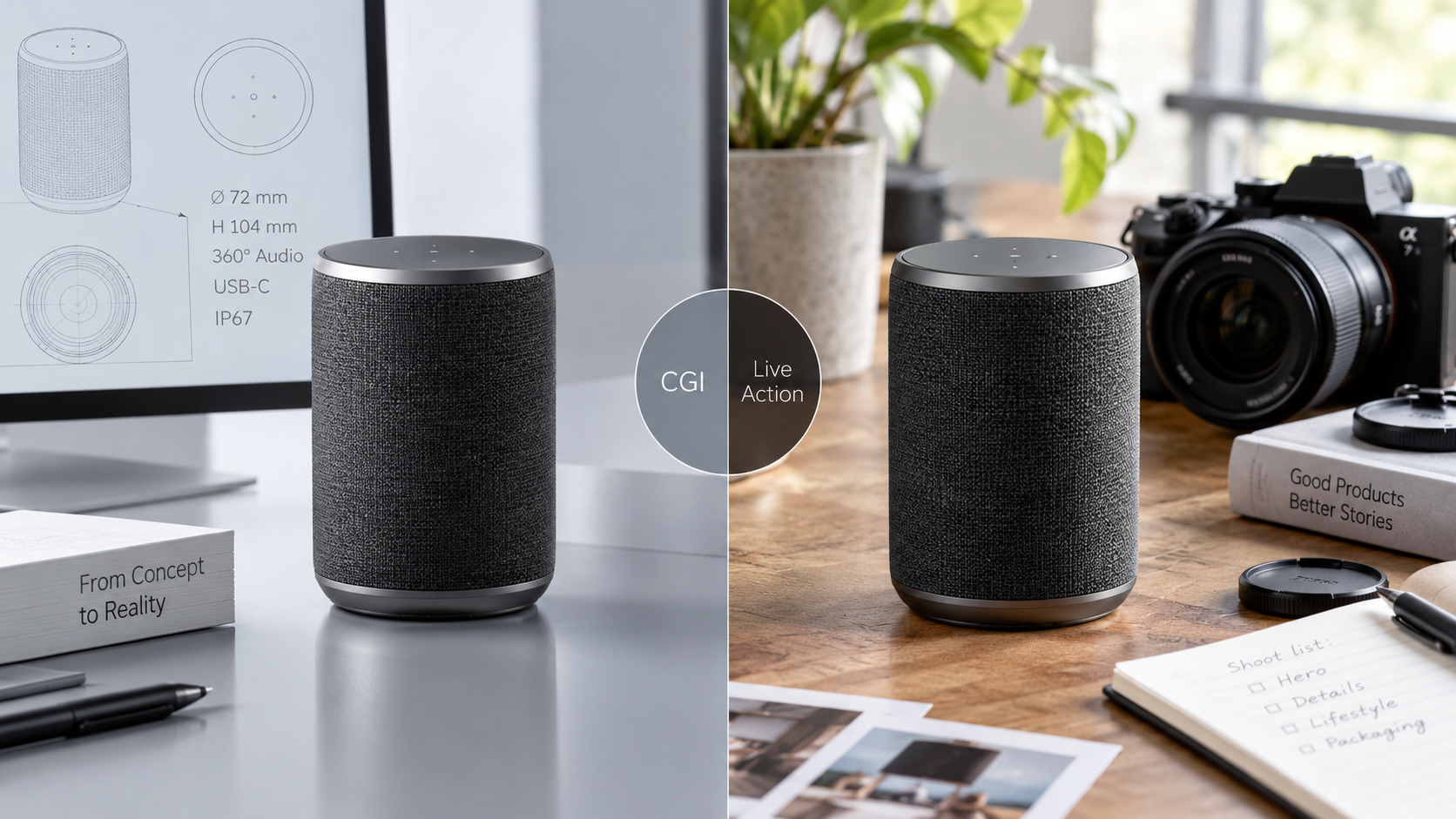
- The visual register. CGI or real footage, clean studio or lifestyle context, quiet or loud.
- The audience. Last, deliberately. Changing audience and creative simultaneously produces results you cannot attribute.
The 3x3 matrix
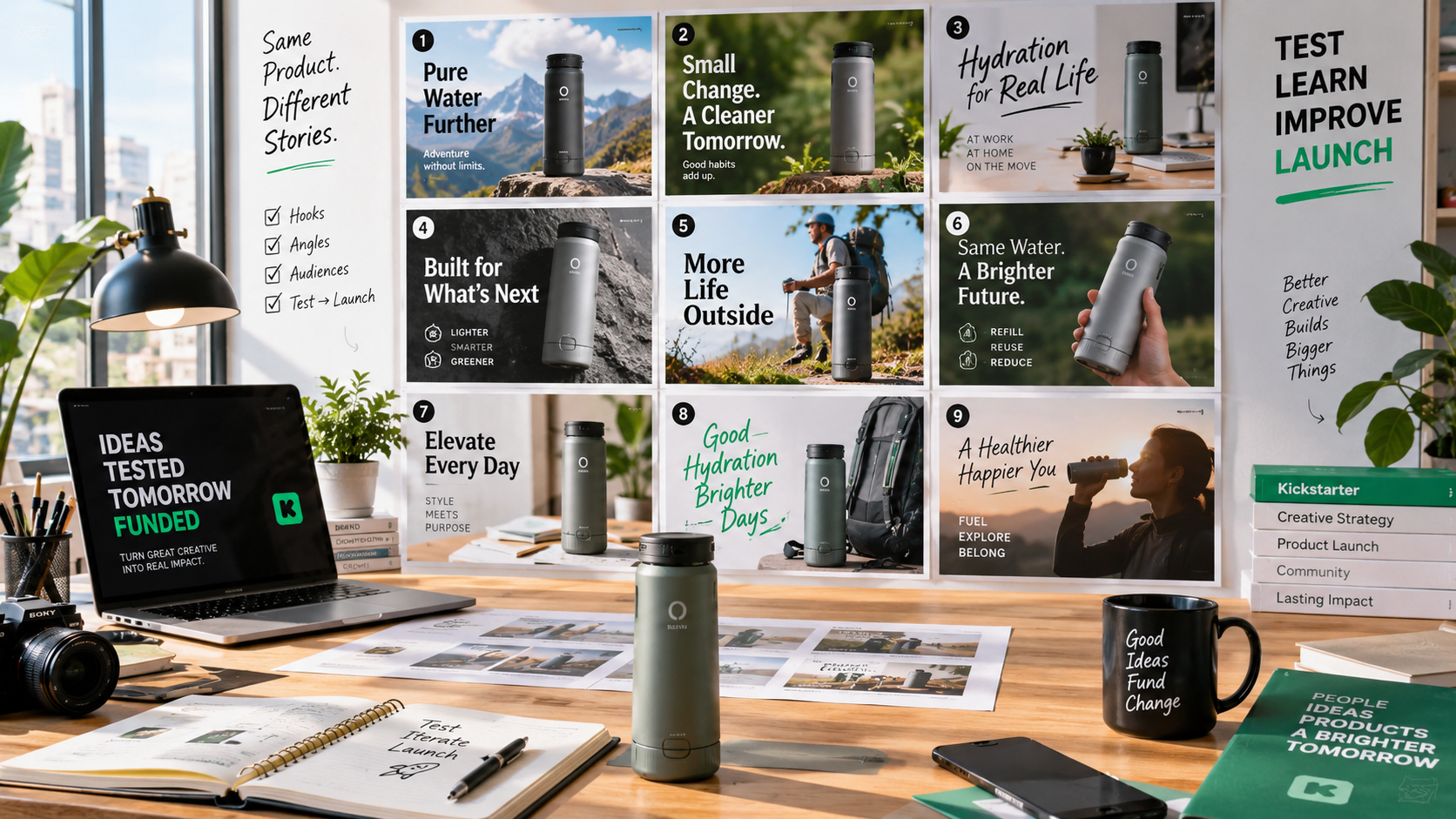
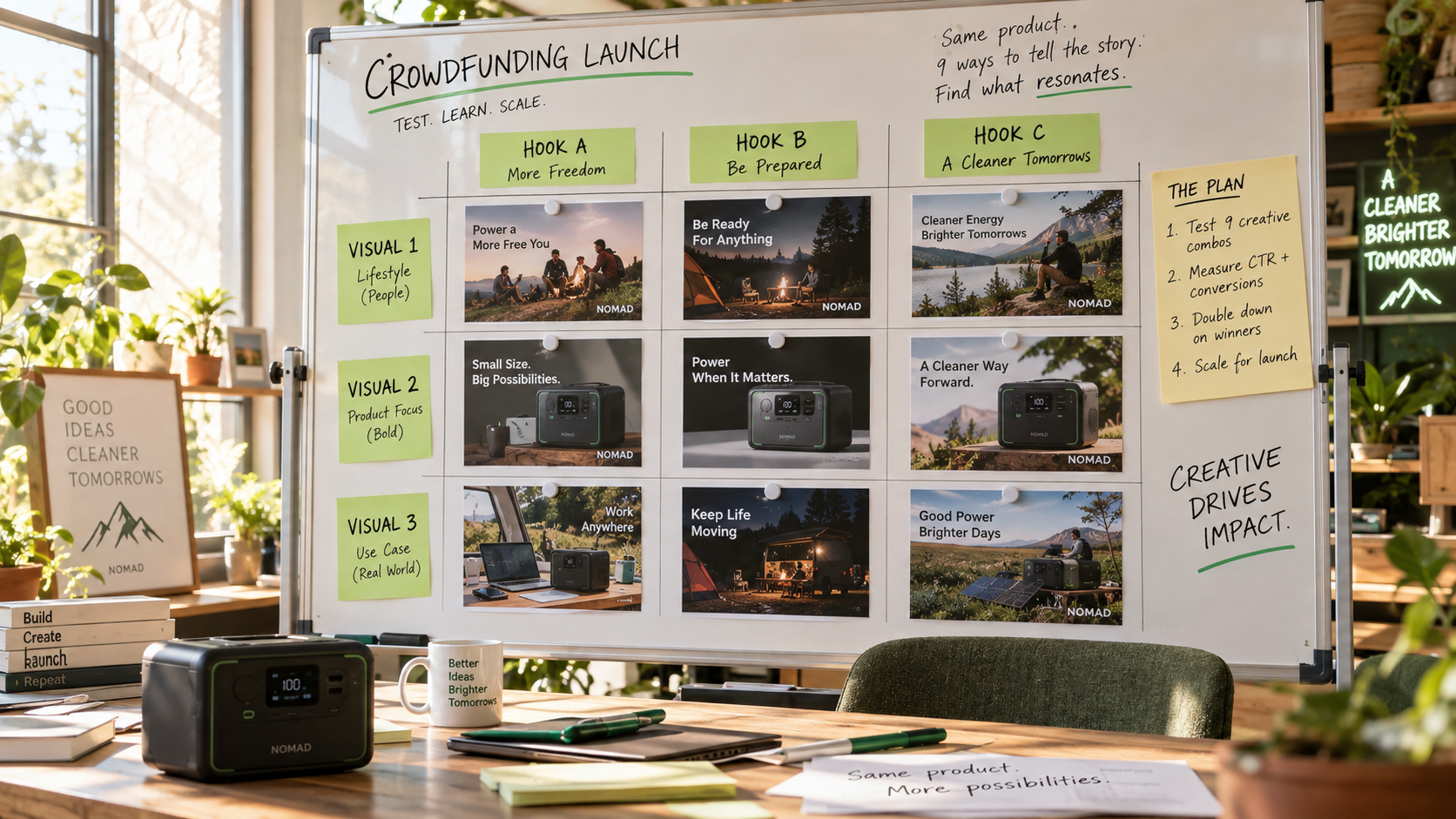
The structure we use is three hooks by three visual treatments: nine assets, all cut from the same master.
That last part is what makes it affordable. One CGI build or one shoot day produces enough material for all nine, because a variant is not a new production - it is a different opening two seconds, a different caption line, and a different grade or context around the same core footage.
| Treatment A: clean studio | Treatment B: lifestyle context | Treatment C: macro detail | |
|---|---|---|---|
| Hook 1: the problem, shown | A1 | B1 | C1 |
| Hook 2: the product doing the impossible thing | A2 | B2 | C2 |
| Hook 3: the direct question | A3 | B3 | C3 |
Budget and duration
Two rules matter more than the exact numbers.
Give each variant enough spend to be readable. The failure mode of small tests is not a wrong answer, it is nine answers that are all noise. If the budget only supports four variants at readable volume, run four.
Run for seven to ten days. Stopping after two days tells you almost nothing: delivery is still stabilising, and you are reading the platform's exploration phase rather than audience preference. Ten days also lets you see the beginning of fatigue, which is useful information in itself.
We size the per-variant floor for each campaign rather than publishing one figure, because it moves with audience size, price point and how many variants you actually need read.
The metrics, and what each one actually tells you
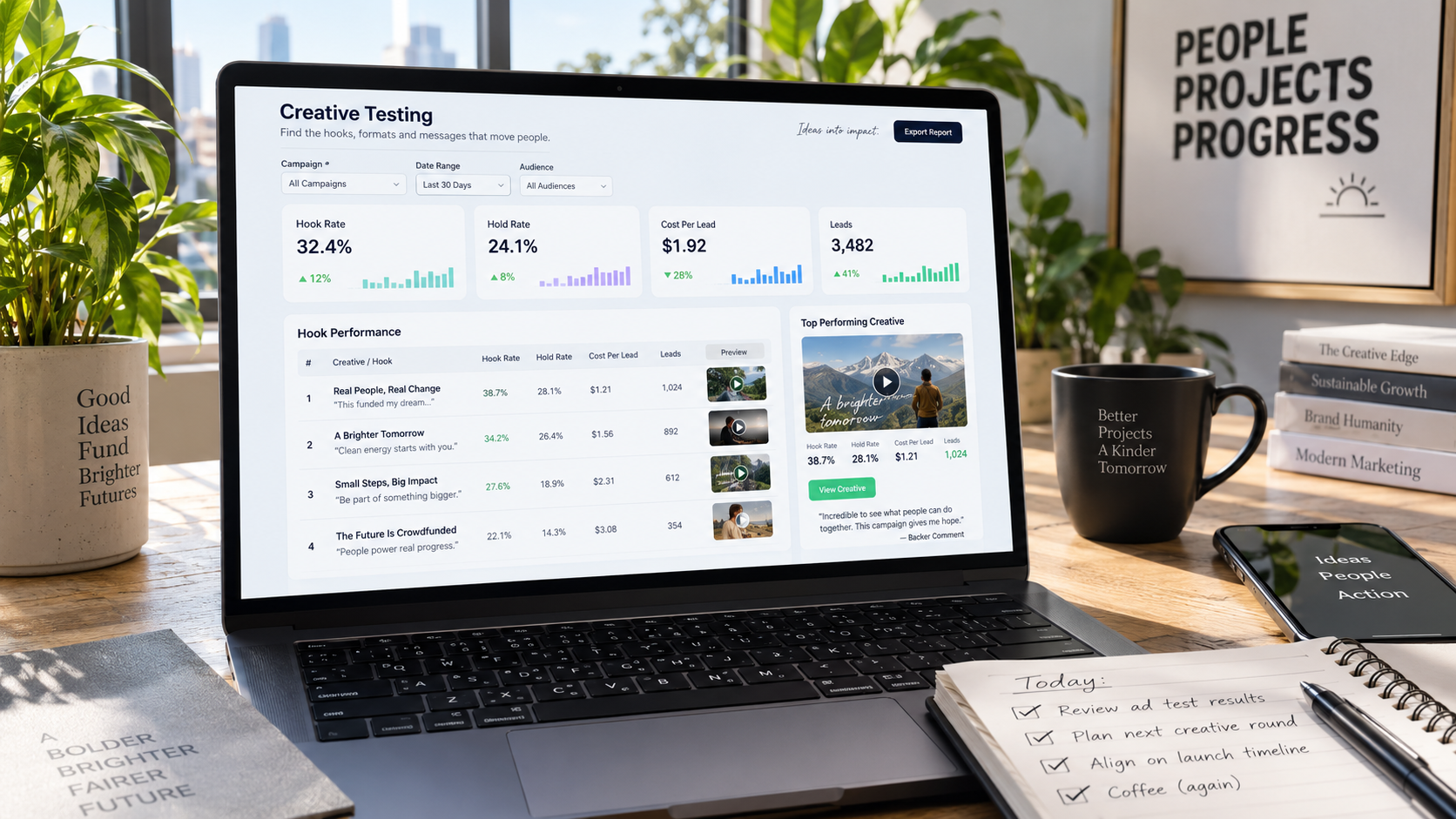
| Metric | What it is | What it tells you |
|---|---|---|
| Hook rate | 3-second views / impressions | Whether the first frame works |
| Hold rate | Completions or 15s views / 3s views | Whether the story works |
| CTR | Clicks / impressions | Whether the promise works |
| Cost per lead | Spend / leads captured | Whether the whole thing works |
Read them in that order, because they are diagnostic in that order. A variant with a strong hook rate and a weak hold rate has a good opening and a bad middle - fixable in the edit. A variant with a good CTR and an expensive cost per lead is attracting curiosity rather than intent, which usually means the ad is promising something the landing page does not deliver.
The trap here is optimising for cheap clicks. It is easy to write a hook that earns clicks from people who will never leave an email address, let alone a deposit. Cost per lead, and later cost per reservation, are the only metrics with money behind them.
Reading results honestly
- Small samples lie. Two variants separated by a few percentage points at low volume are not separated at all.
- Early winners regress. The variant that leads on day two is frequently not the one that leads on day nine.
- Fatigue happens inside the window. A variant can win early and then decay because its audience saw it three times. Check frequency before you crown anything.
- A better audience is not a better creative. If the platform gave one variant a cheaper audience, its numbers are flattering. Compare within the same audience conditions or you are testing delivery, not creative.
- Ties are results. If three hooks perform the same, the difference between them does not matter and you should pick on strategic grounds and move on.
The point of testing is not to find a winner. It is to stop being wrong about something expensive.
The winner becomes the video
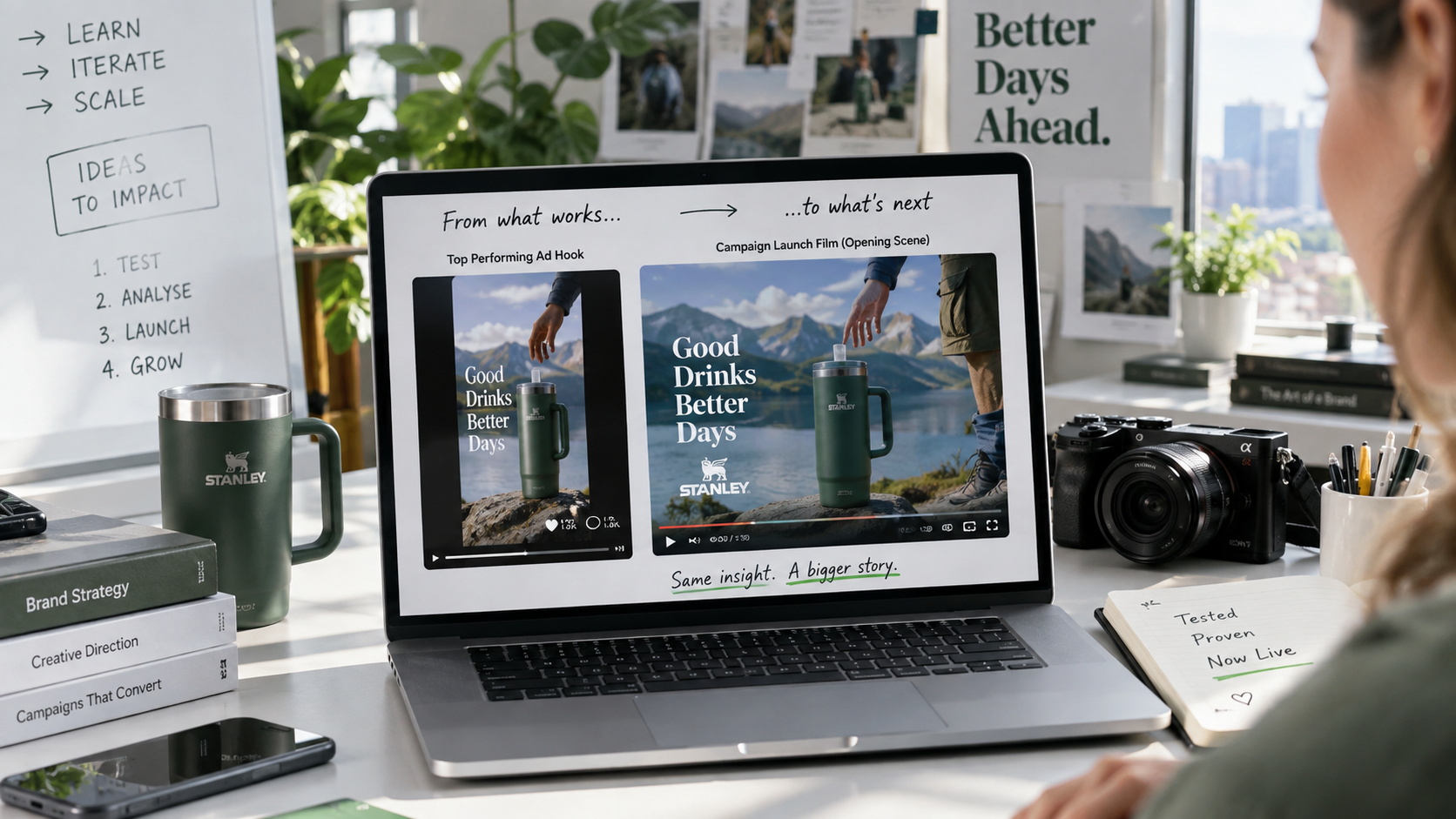
This is where the test pays for itself. The winning hook becomes the first eight seconds of the launch film, exactly as tested - the structure we lay out in the anatomy of a launch video. The winning wording becomes the one-sentence definition at the top of the campaign page. The winning visual register decides which route the film takes, and whether the page leans CGI or lifestyle - the trade-offs are laid out in CGI vs. live action for product launches.
Consistency across those three is where most of the measurable lift comes from. A backer who clicked on one promise and lands on a different one has to re-decide, and re-deciding is where you lose them.
How to build nine variants without nine productions
The efficiency of this method depends entirely on how the master asset is produced, so brief it accordingly.
Ask for a master with clean, separable elements: product moves without background baked in, at least three distinct opening actions, extra handles at the head and tail of every shot, and both vertical and square framings protected in the composition. From that, nine variants are an editing exercise.
If the master is CGI, ask for the camera moves you might want later while the scene is still open - a second angle costs a render, not a rebuild. If the master is filmed, shoot two extra openings on the day even if the script does not call for them. Both cost almost nothing at the time and are expensive to add afterwards.
The four-week testing calendar
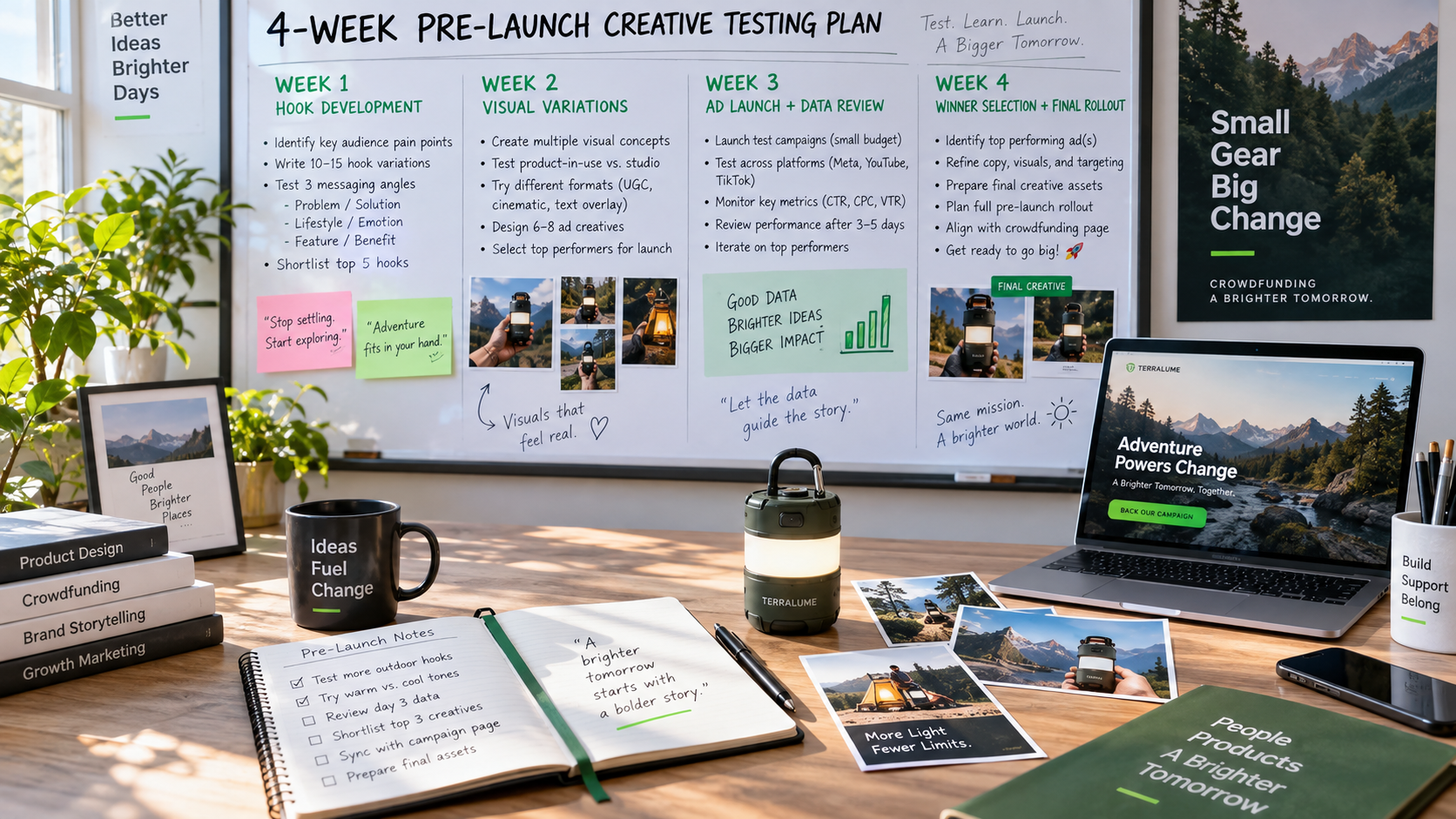
- Week one. Master asset delivered. Nine variants cut. Ad account, pixel and landing page verified end to end with a test lead.
- Week two. All variants live in one campaign, one audience, equal budget. No edits, no pauses, no optimisation.
- Week three. Cut the clear losers. Give the surviving three or four the whole budget. Add one new variant built from what you learned.
- Week four. Confirm the winner at higher spend, then lock it as the hook for the film and the top of the page.
Four weeks is the minimum that produces a decision you can defend. If you only have two, run fewer variants rather than shortening the window.
What a test cannot tell you
Testing answers questions about attention and interest. It does not answer questions about price, tier structure, shipping tolerance or long-term brand. It also cannot validate a product nobody wants: a hook can make people click on a bad idea, and the cost per lead will even look acceptable, right up until day one.
Treat cheap leads with suspicion when they come from a hook that overpromises. The signal to trust is cost per reservation - a small deposit - because that is the only metric in pre-launch where someone has taken a financial position on your product.
Why nine variants cost less than you think
Testing at this scale is only affordable because every variant comes out of one production. We build products in CGI, we shoot live action, and we combine both in the same frame - so a hook test is edit time, not nine shoot days. the NordicTrack Ultra 1 Reformer launch film is the clearest example: CGI product builds composited over green-screen footage of a real person using the machine.
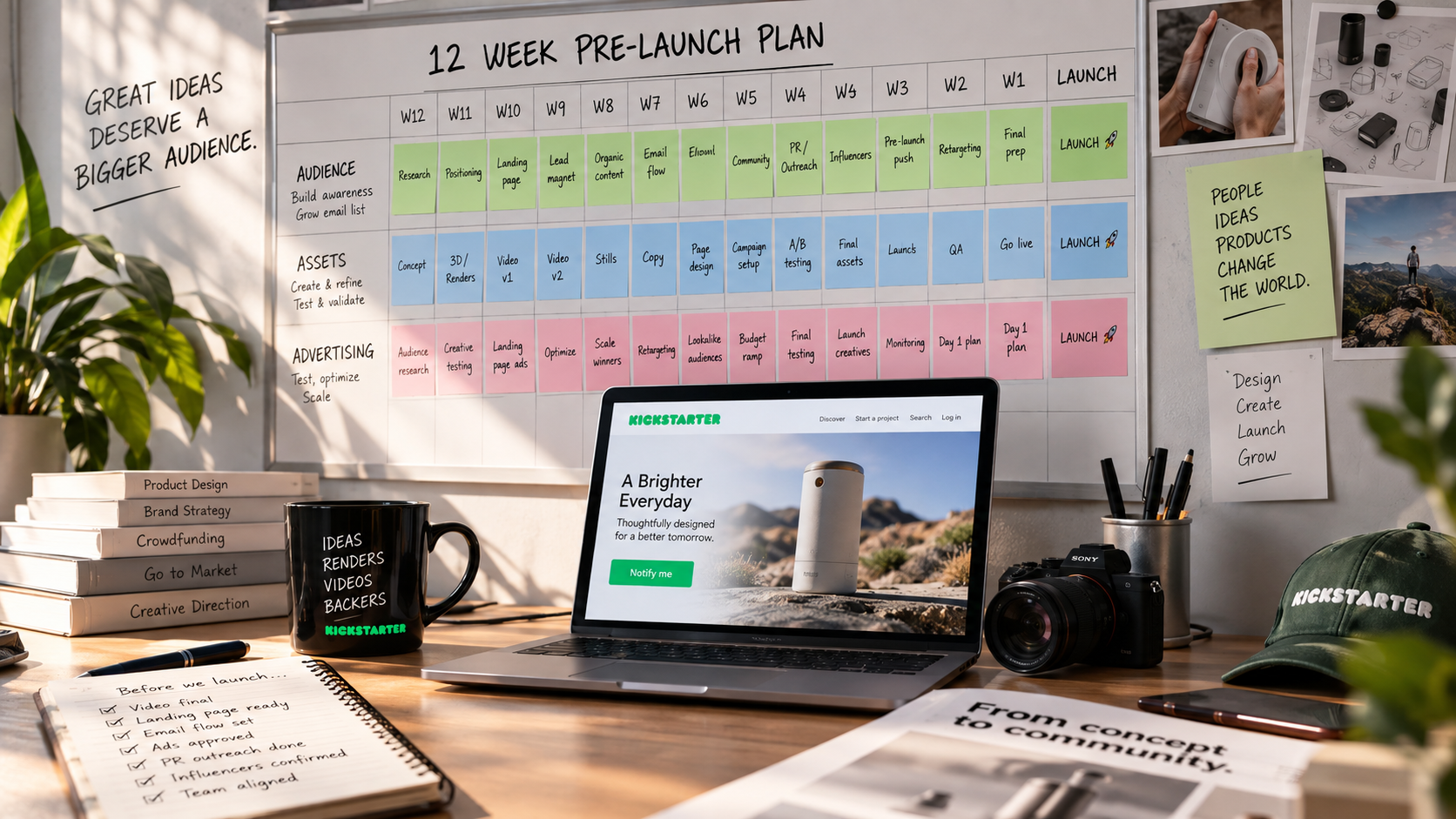
If you want the calendar this test sits inside, read the twelve-week pre-launch timeline. If you want the variants produced for you, that is our launch content system, and the ZeroGo scooter launch shows the asset set it produces.
Frequently asked questions
How much should I spend testing creative before launching?
Plan for a test budget large enough that each variant gets meaningful impressions over seven to ten days, rather than a fixed dollar figure. The practical constraint is per-variant spend: nine variants sharing a tiny daily budget produce nine unreadable results. Fewer variants with real spend behind each will always teach you more, and the cost of the test is trivial next to the cost of launching on the wrong hook.
What is a good hook rate for a product video ad?
Hook rate is the share of impressions that reach three seconds, and the only benchmark that matters is your own account's baseline across comparable products and audiences. Published industry averages mix categories, price points and placements that have nothing to do with your campaign. Measure your first batch, take the median as your reference line, and judge every later variant against that.
How many creative variants do I need?
Three hooks against three visual treatments - nine variants - is enough to learn what matters before a launch. All nine can be cut from the same CGI master or the same shoot day, so the cost is edit time rather than production time. Testing more than that at pre-launch budgets usually splits spend too thinly to produce a readable result.
Can I test creative without a finished product?
You can test creative without a finished product, and most campaigns do. CGI built from CAD produces hero frames, motion loops and colorway variants before a prototype exists, which is precisely the situation pre-launch testing is designed for. What you cannot test convincingly without a physical unit is anything that depends on hands, texture or real environments.